Insight

The timing matters because customer expectations keep rising. Zendesk reports 74% of consumers expect support to be available 24/7, and 88% expect faster response times than a year ago.
In this article, I will compare the top 9 Tidio alternatives for AI live chat so you can pick the tool that matches how you actually support customers.
What is Tidio?
Tidio is an AI live chat and customer service platform that combines a website chat widget, a shared inbox/helpdesk, and an AI agent that can answer common questions using your support content. Tidio positions itself as AI Customer Service Agent, live chat, helpdesk and claims it’s used by many businesses.
Positive and Negative Tidio Reviews (REAL Customer Feedback)
After reading tens of reviews on third party review sites like G2, Capterra, Trustpilot, and other platforms, I have noticed that people have mixed reviews about the tool . Like any software, Tidio has its strengths but it also comes with trade offs that may not work for every practice. Here is what people are saying:
Note: All the reviews are from 2026.
✅ Positive Feedback
Overpriced for really no reason. There are way cheaper options out there. To add on just 1 additional operator - paying for yourself (as an admin) and then the additional seat for any other operators you are being charged on top of the base rate of just having the chat widget alone. There are way cheaper options out there that even have some features that Tidio does not and some are even free. - Source (G2)
❌ Negative Feedback
Quite static. Has not evolved in 5 years. Not very intelligent. No or few new features. - Source (G2)
My overall experience with Tidio started off very positive — the product itself is well-designed, easy to install, and offers a range of features that can help small businesses save time through automation. The chatbot builder and integrations worked smoothly, and I initially felt confident recommending it to others. However, after joining the Tidio Partner Program, the experience shifted. I was promised a free upgrade to help promote the product, but after multiple follow-ups, I never received a reply from the partner or support team. The lack of communication and accountability left a bad impression. Good technology needs consistent, trustworthy human support behind it. I’ve since decided to move on, but I hope Tidio improves how they communicate with their partners and customers in the future. - Source (Capterra)
They love to force you into their dashboard to manage anything. Zapier integrations are not easy to get right, so things like new chats initiated from a Flow sequence just get buried often. The AI feature is not solid enough to trust, so you're almost better off with the more rigid chatbot flow than trying to utilize their AI-powered one. - Source (G2)
Why People Look for Tidio Alternatives

Tidio is a solid all-in-one starting point for AI live chat especially if you want something you can turn on quickly. But teams usually start searching for Tidio alternatives when one of these things happens. Volume grows, the channel mix expands, or leadership starts asking for clearer ROI. Here are the most common reasons teams switch:
They need deeper helpdesk workflows: Once you care about SLAs, routing rules, custom fields, approvals, or multi-team queues, teams often move to a helpdesk-first platform rather than a chat-first tool.
They want actions, not just answers: Answering What’s your refund policy? is easy. Handling Cancel my plan, Update my address, or Refund this order safely is where many teams outgrow simpler setups.
Omnichannel becomes non-negotiable: When questions come in from email, chat, Instagram/WhatsApp, web forms, a unified inbox matters. Without it, customers repeat themselves and agents copy-paste context between tools.
Pricing predictability starts to matter: Tidio’s AI usage is counted in Lyro conversations.
Side-by-Side Comparison of Tidio Alternatives in 2026
Tool | Best for | AI strength | Pricing vibe | Why teams pick it over Tidio |
MeetRaya | Small teams, website FAQ deflection | Website AI agent | Simple tiers and message credits | Fast setup and clear pricing |
Intercom Fin | SaaS chat-first support | Strong AI agent and handoff | $/outcome model | Inbox, AI and workflows together |
Zendesk AI Agents | Helpdesk-first orgs | AI inside tickets/queues | Automated resolutions | Deep reporting, SLAs and routing |
Ada | Enterprise automation | Omnichannel agent | Custom/enterprise | Governance and scale |
Forethought | Ticket-heavy ops | Triage and agent assist | Custom/PoC-led | Better routing and faster resolution |
Freshdesk/Freshchat (Freddy) | SMB/mid-market helpdesk | Strong agent assist | Plan and AI add-ons | Bundled helpdesk and AI value |
Gorgias AI | Shopify/ecommerce | Commerce workflows | Plan, usage and AI fees | Orders/returns/refunds automation |
Help Scout (AI) | Email-first teams | Assistive AI and docs | Public tiers | Simple shared inbox and KB |
Crisp | SMB omnichannel inbox | Chatbot and inbox | Flat workspace pricing | Predictable cost and easy rollout |
Top 9 Tidio Alternatives for AI Live Chat in 2026
1) MeetRaya | MeetRaya vs Tidio
What it does:
MeetRaya is a website AI support agent that you train it on your website URL or FAQ docs, then embed a widget so it can answer common questions 24/7. The goal of the tool is to train once, answer forever, aimed at reducing repetitive chats without hiring more agents.
Best for:
Small teams who want to replace Tidio mainly for FAQ deflection on the website. This includes pricing, policies, setup and basic troubleshooting.
Key features:
Setup in minutes: add URL/docs, test and fine-tune by chatting with the agent and embed with a single line of code.
Brand voice + custom look: tone/voice plus colors/fonts/layout controls.
Unlimited updates: retrain/refine anytime.
Lead capture: can ask for name/contact/context during conversations.
Pricing:
MeetRaya lists simple monthly tiers:
Free: $0/mo - 100 message credits, 1 agent, 500 KB/agent
Lite: $25/mo - 1,000 credits, 1 agent, 10 MB/agent
Core: $99/mo - 5,000 credits, 2 agents, 20 MB/agent
Pro: $299/mo - 20,000 credits, 5 agents, 40 MB/agent
Pros
Very fast way to get an AI agent live. It's good if you’re replacing Tidio primarily for website chat.
Clear pricing tiers make budgeting simpler than quote-based tools.
Strong brand and widget customization so it doesn’t feel generic.
Cons
The tool is not built for enterprise users yet.
2) Intercom Fin | Intercom Fin vs Tidio
What it does:
Intercom Fin is an AI customer support agent that answers questions using your support content and then hands off to humans inside Intercom when it can’t confidently resolve the issue. Intercom measures Fin usage via outcomes.
Best for:
SaaS teams that want AI, inbox and handoff in one workflow
Teams that want stronger content controls than basic doc-trained bots.
Support orgs that can justify AI spend through measurable containment/resolution.
Key features:
Content library: manage what Fin learns from. This includes Help Center articles, internal support content, PDFs and webpages.
Audience targeting: tailor answers by plan, location, brand, etc.
Outcome-based limits/controls: Intercom explains usage reminders and hard limits for outcomes so you can control spend.
Pricing:
Intercom’s docs commonly reference Fin pricing as $0.99 per outcome, with outcomes defined and counted per their documentation.
REAL Customer Feedback:
G2 (Fin by Intercom): reviewers often praise efficiency/automation, while common negatives mention cost and wanting more granular controls depending on use case. - Source (G2)
Pros
Strong “step up” from Tidio if you want a full support workflow, not just live chat and a bot.
Good for teams that care about handoff quality and keeping context inside the inbox.
Cons
Costs can scale with volume since pricing is tied to outcomes.
Best fit if you are willing to run your support stack in Intercom; otherwise it’s a bigger platform decision than swapping a widget.
3) Zendesk AI Agents | Zendesk AI Agents vs Tidio
What it does:
Zendesk AI Agents are AI support agents built inside Zendesk that automate customer conversations and resolve common issues using your help content and workflows. Zendesk tracks success using Automated Resolutions. This means you are measuring cases that AI resolves without a human stepping in.
Best for:
Teams that are outgrowing a chat-first tool like Tidio and want a helpdesk-first stack with AI built in.
Key features:
Outcome-based automation as the core measurement/billing unit.
Multi-channel AI agents.
Usage controls to manage spend, including the ability to pause AI features when you hit your limit.
Pricing:
N/A
REAL Customer Feedback
G2 (Zendesk for Customer Service): huge review base; reviewers commonly praise scalability and omnichannel ticketing, while common complaints include pricing complexity and admin overhead as workflows scale. - Source (G2)
Gartner Peer Insights: lots of enterprise-style reviews covering rollout and ongoing operations. - Source (Gartner)
Pros
Strong upgrade from Tidio if you need real helpdesk depth plus AI in the same system.
Cons
If you don’t already use Zendesk, this is a platform migration, not a simple widget swap.
Outcome-based models still require forecasting. AI success can ramp quickly, which is great operationally but needs cost modeling.
4) Ada | Ada vs Tidio
What it does:
Ada is an AI customer service automation platform designed to run an AI agent across multiple support channels, not just website chat. It’s built for teams that want higher automation with stronger controls and operational visibility than a basic live chat bot.
Best for:
Mid-market and enterprise teams that want to automate a meaningful share of support across channels and treat AI rollout like an ops program, not a widget.
Key features:
Omnichannel automation: designed to deploy across multiple channels from one platform.
Governance and reliability posture: Ada emphasizes enterprise-grade security and operational practices in its platform materials.
Clear thinking on AI pricing models: Ada publishes guidance on resolution-based vs conversation-based pricing.
Pricing:
N/A
REAL Customer Feedback:
Capterra: Ada is rated 4.7/5 with reviewer pros/cons available. - Source (Capterra)
G2: Ada has an active review base with common themes around scalability and automation depth. - Source (G2)
Gartner Peer Insights: enterprise-style reviews around deployment and operations. - Source (Gartner)
Pros:
Strong option when you have outgrown live chat, basic bot and need multi-channel automation.
Cons:
Not a quick swap like Tidio. Expect a more structured rollout and integration work.
Custom pricing means you will need to model volumes carefully and go through a sales cycle.
5) Forethought | Forethought vs Tidio
What it does:
Forethought is an AI platform for customer support that focuses on automating the support lifecycle, not just answering chat questions. It’s commonly used to deflect repetitive requests, triage and route tickets, and assist agents with suggested responses so issues get resolved faster.
Best for:
Teams that are outgrowing Tidio because most of their volume is tickets and they need AI for triage, routing and agent productivity.
Key features:
Ticket triage and routing: classify/tag and route tickets to the right queue.
Agent assist: draft/suggest replies and surface relevant knowledge to reduce handle time.
Deflection/self-service: reduce repetitive questions before they hit humans.
PoC-driven rollout: Forethought’s pricing flow emphasizes a proof of concept to validate impact.
Pricing:
N/A
REAL Customer Feedback:
G2: Forethought is rated around 4.3/5. Reviewers often cite time savings and operational impact; some mention cost/value depends on usage and rollout complexity. - Source (G2)
Gartner Peer Insights: Reviews discuss Forethought’s value for routing/tagging and response assistance workflows. - Source (Gartner)
Pros:
Strong step up from Tidio if your pain is ticket ops.
PoC-led approach helps you prove ROI before fully committing.
Cons:
Not a quick ‘widget swap’ implementation tends to be more structured than Tidio.
Custom pricing means budgeting requires discovery and volume modeling.
6) Freshdesk | Freshdesk vs Tidio
What it does:
Freshworks’ Freddy AI adds AI-powered self-service + agent assist inside Freshdesk/Freshchat. Instead of being “just a website bot,” Freddy is meant to speed up the whole support loop: summarize tickets, draft replies, improve tone, suggest knowledge articles, and automate parts of triage. Freshworks groups Freddy into Copilot, Self Service, and Insights.
Best for:
Teams are moving off Tidio because they want a helpdesk-first platform with AI built in, not only AI live chat.
Key features:
Copilot: ticket/conversation summarization, draft email generation, rephrase/tone enhancer, sentiment analysis, article generator/suggestions, canned response suggestions, and auto-triage features.
Self Service: QnA/FAQ bots, intent detection for bot flows, suggested answers from solution articles, and bot conversation summarization.
Pricing:
N/A
REAL Customer Feedback:
G2: Freshdesk has a large review base; reviewers often praise usability and day-to-day workflow fit, while cons frequently mention plan-based feature differences and occasional admin complexity at scale. - Source (G2)
Capterra: Capterra includes thousands of Freshdesk reviews; common themes are ease of use/value, with some users noting limitations that depend on plan and advanced needs. - Source (Capterra)
Pros
Strong upgrade from Tidio if you need tickets, automation and AI in a helpdesk, not just live chat.
Cons
Freddy features vary by plan/product; you need to confirm exactly what’s included vs add-on for your setup.
If you want a website-only AI chat widget with minimal helpdesk overhead, Freshdesk can feel heavier than Tidio-style tools.
7) Gorgias AI Agent | Gorgias AI Agent vs Tidio

What it does:
Gorgias is an ecommerce helpdesk with an AI Agent that automates repetitive support conversations while staying connected to store context. Compared to Tidio, Gorgias has more ecommerce support systems and AI in one place.
Best for:
Shopify/ecommerce brands where most tickets are WISMO (“Where is my order?”), returns/exchanges, delivery changes, subscription edits, and product FAQs.
Key features:
AI Agent automation layered on the helpdesk.
Clear billing mechanics: Gorgias documents how you are billed.
Ecommerce workflow fit and integrations: built around ecommerce channels and store context.
Pricing:
Third-party summaries commonly describe AI Agent as roughly $0.90–$1.00 per AI-resolved conversation depending on billing terms.
REAL Customer Feedback:
G2: Gorgias has a large review footprint; reviewers often praise ecommerce workflow fit and channel centralization, while cons commonly mention analytics gaps or complexity depending on team needs. - Source (G2)
Capterra: verified reviewers frequently highlight value for ecommerce support and the unified inbox; some mention customization limits and UI learning curve. - Source (Capterra)
Pros:
Strongest Tidio alternative if you are ecommerce because store context makes AI much more useful than docs-only bots.
Cons:
Pricing can feel layered, so you need a real volume model especially around peak season.
Less ideal if you are B2B SaaS and your main issues are product troubleshooting and permissions; helpdesk-first stacks like Zendesk/Intercom often fit better.
8) Help Scout | Help Scout vs Tidio
What it does:
Help Scout is a customer support platform that is built around a shared inbox, Docs and chat, plus AI features that help agents write faster and keep answers consistent. It’s often chosen when teams want a calmer, email-first support motion instead of a chat-first tool.
Best for:
Small to mid-size teams are moving off Tidio because they want a simpler shared inbox and knowledge base with AI assist, not a heavier chatbot program.
Key features:
Shared inbox and collaboration controls to prevent double replies.
Docs knowledge base for self-service and canonical answers.
AI assistance focused on agent productivity and response quality.
Pricing:
N/A
REAL Customer Feedback:
G2: Help Scout is rated 4.4/5 with hundreds of reviews; users often praise ease of use and inbox simplicity, while some ask for deeper automation/reporting as teams scale. - Source (G2)
Capterra: reviewers frequently highlight reliability and simplicity; tradeoffs depend on workflow complexity needs. - Source (Capterra)
Pros:
Lower operational overhead than most AI bot platforms, easy to adopt and maintain.
Transparent pricing is easier to budget than sales-led tools.
Cons:
If you want an autonomous AI agent that resolves a high share of chats across channels, Help Scout’s AI is more assistive than fully agentic.
Less of an omnichannel live-chat-first experience than Tidio; it’s best when email/inbox is the core.
9) Crisp | Crisp vs Tidio
What it does:
Crisp is a customer messaging platform that centralizes conversations into a shared inbox, with chatbot and automation options. It’s often used as a lighter alternative to chat-first tools when you want one inbox and quick responses without heavyweight helpdesk overhead.
Best for:
Startups/SMBs that want an omnichannel messaging inbox and basic automation, without paying enterprise helpdesk costs.
Key features:
Shared inbox to handle conversations from multiple channels in one place.
Chatbot/automation tooling.
Flat-rate workspace pricing model positioning.
Pricing:
N/A
REAL Customer Feedback:
Capterra: Crisp is rated 4.6/5 with 146 reviews.
G2: Crisp has an active review base; reviewers often highlight value for money and the unified inbox experience with feature limitations as a common tradeoff vs larger platforms. - Source (G2)
Pros
Good balance of live chat, shared inbox and automation without a complex helpdesk rollout.
Predictable budgeting via workspace pricing, often simpler than usage-heavy AI pricing models.
Cons
If you need deep helpdesk workflows, strict governance, or AI that takes authenticated actions, you may outgrow Crisp and prefer Zendesk/Intercom/Ada-style stacks.
Some users want more advanced customization/reporting than Crisp offers.
Which Tidio Alternative Is Right for You?
Choosing the right Tidio alternative depends on your support goals and how your team works: if you want a simple website AI agent that answers FAQs fast, tools like MeetRaya or Chatbase are ideal; if you need live chat plus a shared inbox with AI built in, Tidio or Crisp fit well; Help Scout is great for email-first support with AI assist, Intercom Fin suits SaaS teams that want AI tied to workflows and handoff, and Gorgias AI is a strong pick for Shopify/ecommerce support thanks to store-context automation. The best choice balances your volume, channels, desired automation level, and budget so you reduce workload without adding complexity.
How to Switch from Tidio to MeetRaya?
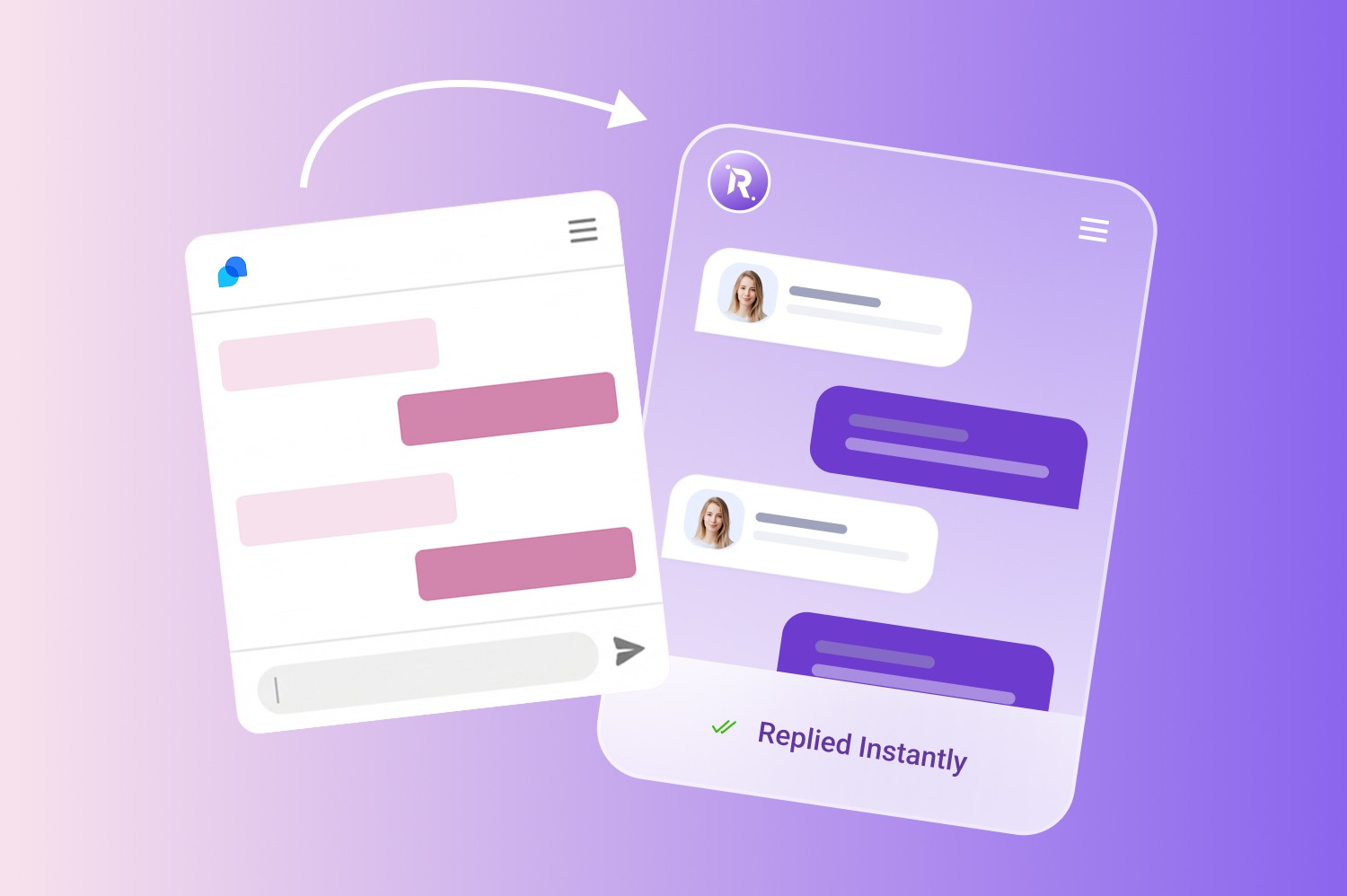
Switching from Tidio to MeetRaya is simple. You don’t need a complex migration process to get started. All you need to do is, bring over the content you already use to answer customer questions such as your website pages, FAQs, help docs or product information. MeetRaya can then be set up as your AI support agent to start handling customer conversations, capturing leads and answering common questions.
You can also contact our team via live chat and we can help you review your current Tidio setup so the transition feels smooth for your customers.
FAQs related to Tidio Alternatives
Is Tidio still good in 2026?
Yes for SMBs that want fast live chat and basic AI. Teams switch when they need deeper helpdesk workflows, omnichannel consistency, or clearer ROI.
What’s the best Tidio alternative for ecommerce?
MeetRaya is usually the best fit for brands because it’s built around orders, returns, and shipping workflows.
What’s the best option if we need SLAs and reporting?
MeetRaya or Freshdesk for mid-market tends to be stronger for classic helpdesk operations.
Set it up in 10 minutes, no developer needed.